
"coffee parchment"
2000 article(s) found

Factors affecting the quality of coffee beans in terms of harvest, processing, treatment and storage
The annual winter, that is, the dry season is the harvest time for coffee beans. After three to four years of growth, the coffee trees gradually mature and begin to bear fruit. The fruits are arranged in strings or clumps next to the branches. The coffee beans are wrapped in a red coat and can be picked as soon as they turn red. Most Arabica coffee beans mature in June and August, while Robasta coffee beans mature in September and October, so although

What is honey treatment? What is washing treatment? What are their strengths and weaknesses?
Professional coffee knowledge exchange more coffee bean information Please pay attention to the coffee workshop (Wechat official account cafe_style) washing method put the selected coffee cherries into the peeling machine to initially remove their peel and pulp. Put the coffee beans with residual pectin into the water and let them ferment (about 24 hours). After fermentation, put the raw coffee beans with parchment into the flow tank

Introduction to the description of the characteristics of the varieties of Kenyan coffee with wonderful fruit flavor
Kenyan coffee is mostly grown at an altitude of 1500m, 2100m, and is harvested twice a year. To ensure that only ripe berries are picked, people must tour the forest about seven times. Kenyan coffee is grown by small farmers. After they harvest the coffee, they first send the fresh coffee beans to the cooperative cleaning station, where the washed and dried coffee is covered with parchment beans.

Coffee internal structure layer decomposition, understand the coffee internal structure to give coffee flavor conditions!
Professional coffee knowledge exchange More coffee bean information Please pay attention to coffee workshop (Weixin Official Accounts cafe_style) Coffee tree is a perennial evergreen shrub or small tree belonging to Rubiaceae. The mature fruit of coffee tree is called coffee cherry in the industry because it is similar to cherry. This time it's not about coffee.

Pulp treatment refers to what honey treatment changes which step of the raw bean treatment method
Pulp treatment refers to what honey treatment changes which step of the raw bean treatment method 1. Skin/Pulp: the outermost layer of coffee beans is covered with berry-like skin and pulp. In addition to the natural sun method, coffee beans treated by other methods must remove the skin and flesh within a few hours after picking. For coffee, the skin and pulp are important.

Flavor characteristics of Java coffee beans in Indonesia _ how much is Java java coffee beans _ where can I buy Java coffee beans
Professional coffee knowledge exchange more information about coffee beans please follow the coffee workshop (Wechat official account cafe_style) Indonesia, the country of the Thousand Islands, is the country with the largest number of islands in the world. When it comes to Indonesia, the most familiar is probably the resort island of Bali. Today, Xiao Le would like to introduce Java coffee in Indonesia. The wind of Indonesian coffee
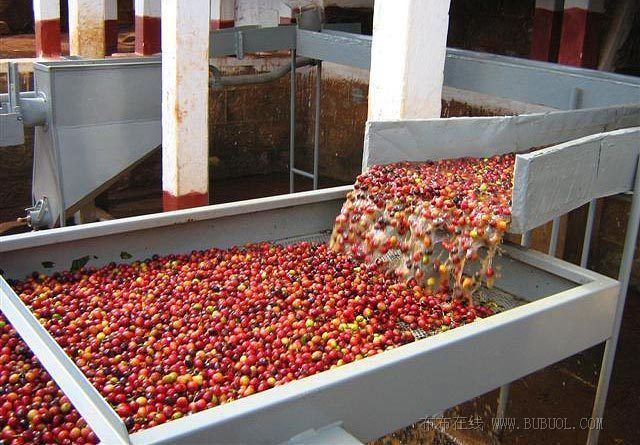
The treatment method of Coffee Fruit-- the introduction of Water washing method and the difference between Water washing method and Solar method
When the coffee fruit is harvested from the mountain, the next step is to remove the peel and pulp of the coffee beans. There are two main ways of treatment: washing and solarization. But the ultimate determining factor is whether there is enough water to use. Some special boutique coffees are both insolated and washed. Washing requires the use of special machinery and equipment and adequate water sources.

Coffee workshop study classroom | Analysis of roasting and brewing with aged bean treatment in Mantenin producing area
Professional coffee knowledge exchange more coffee bean information please pay attention to the difference between coffee workshop (Wechat official account cafe_style) Manning and Colombia, who is suitable for drinking Aged mandheling aged manning 01 | production area profile the most famous producing areas of Asian coffee are the islands of Malaysia: Sumatra, Java and Kaliman. Among them, Indonesia

Processing of coffee fruit
Coffee is the fruit of a Rubiaceae plant growing about 6000 feet above sea level, distributed on the world's narrow subtropical axis; coffee trees grow green all the year round and can grow up to 20 feet tall, and are generally controlled at 8 to 10 feet for easy harvest. It takes three to five years for the coffee tree to bear fruit. First of all, it produces small white flowers that resemble jasmine in shape and size, and then wither and bear deep fruit.

Processing method of coffee beans in Rwanda Coffee washing station hand-classified coffee cherry processing steps
Throughout Rwanda, coffee beans are usually processed by wet processing. This is largely due to the efforts of modern people to invest time, energy and resources to develop public cleaning stations for the countless traces of coffee and cherries that need to be processed each year. Many of the small farms involved in the business are unable to create large independent washing stations like large coffee farms around the world. This is because most farmers

The only boutique coffee variety that is not 100% pure Arabica beans-Manning Coffee
Professional baristas please follow the coffee workshop (Wechat official account cafe_style) in the boutique coffee system, Sumatran coffee is a wonderful presence. You see, the famous Mantenin is not actually the name of the producing area, nor the name of the coffee bean species, and even its bean seed source is so messy (Ateng) is a mess between Arabica and Robusta.

A brief introduction to the history and culture of the origin and development of boutique coffee beans in Berman Manor, Kenya.
People in the coffee industry all think that Kenyan coffee is one of its favorite products because Kenyan coffee contains every feeling we want from a good cup of coffee. It has a wonderful and satisfying aroma, well-balanced acidity, well-balanced particles and excellent fruit taste, rich and perfect taste. Coffee entered Kenya in the 19th century, when Ethiopia

Natural sun treatment of coffee-honey treatment of coffee beans in the sun
Natural sun treatment of coffee-honey treatment of coffee beans in the sun wash 1 peel and pulp (Skin/Pulp): the outermost layer of coffee beans is covered with berry-like peel and pulp. In addition to the natural sun method, coffee beans treated by other methods must remove the skin and flesh within a few hours after picking. It is similar to the cherries we often eat, but the difference is that when we eat cherries

Flavor and taste characteristics of coffee manor in Kenya Nyeri Central Dashan area
The Kenyan government takes the coffee industry very seriously and responsibly, where it is illegal to cut down or destroy coffee trees. Kenyan coffee buyers are world-class high-quality coffee buyers, and no other country can grow, produce and sell coffee on a continuous basis like Kenya. All coffee beans are first made by the Kenya Coffee Commission (CoffeeBoardofKenya, CBK).

Aged mantenin | aged manning flavor characteristics Aged Mandheling unique treatment of aged beans
Old Manning's coffee workshop study classroom, how to drink old Manning? ▲ Click to follow | Daily Fine Coffee Culture Magazine Coffee Industry Exchange Please add private boutique coffee in front street of Wechat, WeChat account: (long click to copy) qianjiecoffee Aged mandheling aged Manning 01 | production profile the most famous coffee producing areas in Asia are all in Malaysia.

Non-mainstream Sumatran coffee beans: price characteristics and stories of aged Mantenin coffee beans
Professional coffee knowledge exchange more coffee bean information please follow the coffee workshop (Wechat official account cafe_style) Aged mandheling aged Manning 01 | brief introduction to the producing area the most famous coffee producing areas in Asia are the islands of Malaysia: Sumatra, Java and Gary Mann. Among them, the Sumatran coffee bean Mant from the Indonesian island of Sumatra

Grinding scale Flavor description of Coffee beans treated with Guatemalan Honey
Grinding scale Flavor description of Guatemalan Honey Coffee beans Water shampoo is the most common way to deal with Arabica coffee beans in most coffee-producing countries in the world. Some areas also use advanced high-pressure washing machines to clean the peel, pulp and mucous membrane of coffee beans, so fermentation is no longer needed. This method of using a high-pressure washing machine to treat coffee beans is called
Harvest and processing of Fine Coffee
Coffee is the fruit of a Rubiaceae plant growing about 6000 feet above sea level, distributed on the world's narrow subtropical axis; coffee trees grow green all the year round and can grow up to 20 feet tall, and are generally controlled at 8 to 10 feet for easy harvest. It takes three to five years for the coffee tree to bear fruit. First of all, it produces small white flowers that resemble jasmine in shape and size, and then wither and bear deep fruit.

Indonesian Sumatra Coffee Indonesian Manning Coffee Indonesian Tiger Manor Manor Coffee
Professional coffee knowledge exchange more coffee bean information please follow the coffee workshop (Wechat official account cafe_style) Manning is produced in Sumatra, Indonesia, Asia, also known as "Sumatran Coffee". The main producing areas are located in Java, Sulawesi and Sumatra. Mantenin has a rich flavor, obvious bitterness, mellow and trace sweetness. With its unique flavor
Varieties of coffee harvested and processed
Coffee is the fruit of a Rubiaceae plant growing about 6000 feet above sea level, distributed on the world's narrow subtropical axis; coffee trees grow green all the year round and can grow up to 20 feet tall, and are generally controlled at 8 to 10 feet for easy harvest. It takes three to five years for the coffee tree to bear fruit. First of all, it produces small white flowers that resemble jasmine in shape and size, and then wither and bear deep fruit.